


Reviewing the Mitsubishi Outlander PHEV
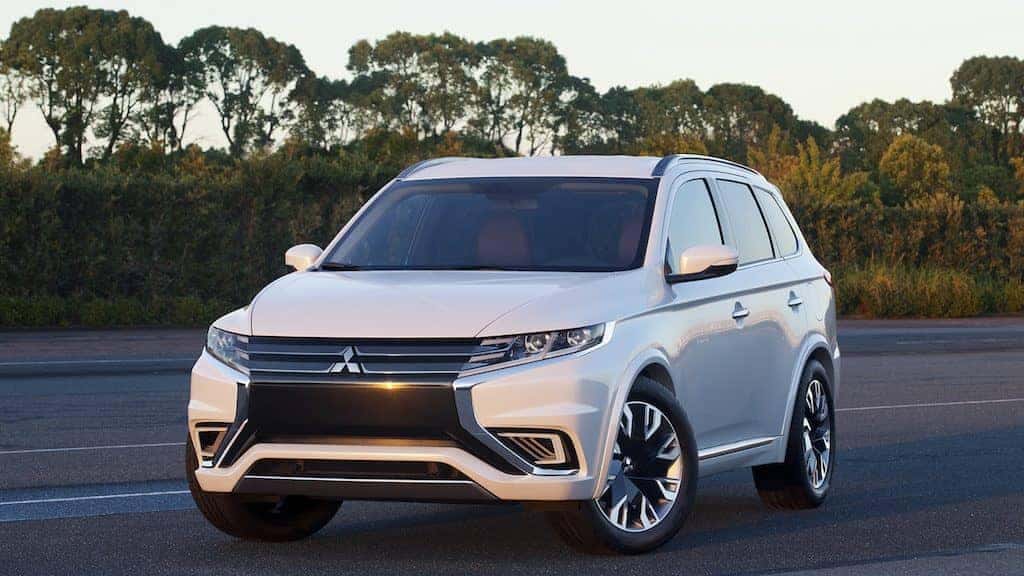
The Mitsubishi Outlander Plug-In Hybrid (affectionately referred to as PHEV) has been taking Europe and Japan by storm, zooming to the top of the best-selling lists. Looking at the Netherlands alone, the PHEV has been responsible for 95-percent of total Outlander sales. To keep up with the high demand, the vehicle has reportedly been delayed in the United States for at least a couple of years.
That’s disappointing, as the PHEV is one of the most innovative electric cars on the market. Considering it’s combination of impressive attributes, there’s no doubt that Mitsubishi’s hybrid would be a hit in the states. While it will take a while for the vehicle to show up on a local Mitsubishi Outlander dealership ‘s lot, you can at least appreciate the European and Japanese versions…
In July, it sounded like that PHEV would be making it’s way to the states in time for spring of 2016. In fact, Steve Gooding, the direct of The Royal Automobile Club Foundation for Motoring (known as the RAC Foundation), sounded very optimistic about a release, referring to the PHEV’s low maintenance costs.
“The [popularity of the] Mitsubishi Outlander…suggests that if the industry can offer the style of vehicles motorists want at a competitive price, they will vote with their wallets,” he said ( via Brad Berman of PluginCars.com ).
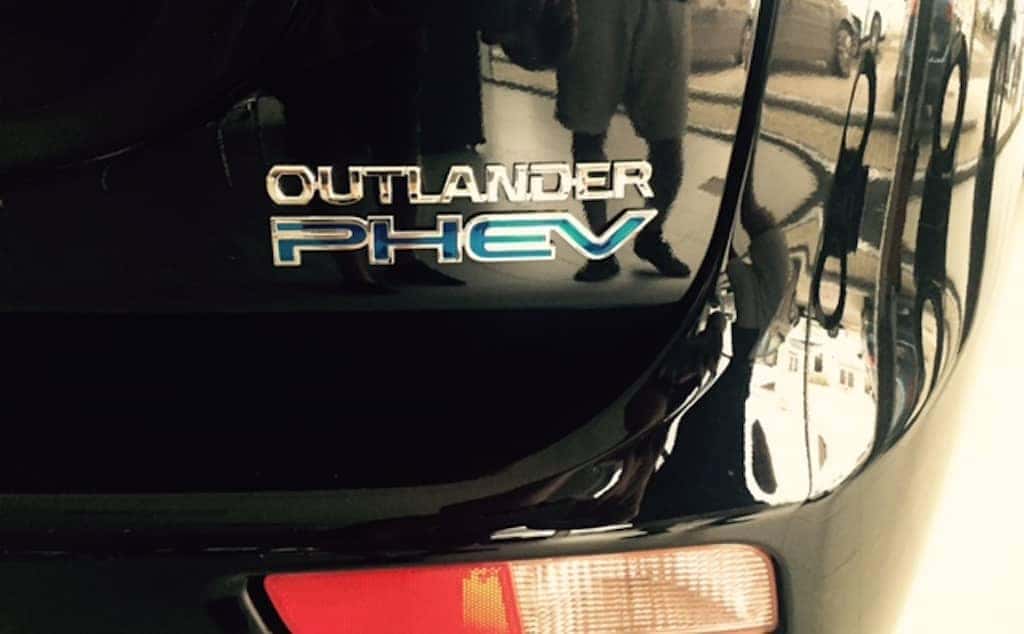
You won’t really be able to tell a PHEV apart from a regular 2016 Outlander (besides, of course, the vehicle’s badging), but dive a little deeper and you’ll find a variety of differences. It of course starts underneath the hood, as the drivetrain has been taken out. In it’s place is a 230Kg Li-ion battery pack (which, as Alun Taylor of The Register points out, was taken directly from Mitsubishi’s iMiEV), two 60kW electric motors (with each being hooked up to one axle), and, as Taylor describes, a “119bhp/89kW two-liter petrol engine that’s connected to the front wheels by a GKN eTransmission with a hydraulic clutch.” Sounds impressive, right?’
As the writer points out, this configuration means the PHEV can operate in different ways. It can operate by using the electric motor and main-source power from the 12kWh drive battery, or it can pair the electric motor with the petrol engine, which will serve as a type of “generator.”
The car mostly operates in four-wheel drive, but Taylor explains that it’s possible to run in front-wheel drive when the petrol engine is directly powering the front wheels. When the all-wheel drive is needed, the electric motors just jump in and do their job. Furthermore, the PHEV can operate as a hybrid or pure electric hybrid, and Taylor notes that you won’t be able to tell the difference due to the quiet cabin.
Taylor calls the handling “tidy and predictable,” nothing that there’s no more body roll that you’d typically expect from such a tall vehicle. The suspension has been designed to deliver “comfort and ground clearance,” which Taylor says has taken precedence over the “outright cornering ability.”
There have been a number of other improvements made to the hybrid, including better fuel economy (which Shahan estimates to come in around 20 miles per gallon) and a better electric range (which is now just short of 38 miles). Potential buyers may be disappointed by those numbers, but Mitsubishi has compensated by including a “save” option. If you’d rather opt for fuel and save your electric energy for a more advantageous time, you have that option.
While the suggested acceleration spec says the 0-62 time is around 11 seconds (with a 106 mph top speed), Taylor believes the actual number to be even better. Finally, the vehicle comes in around 4,000 pounds, but the impressive torque and horsepower capabilities still makes for a powerful, smooth ride.
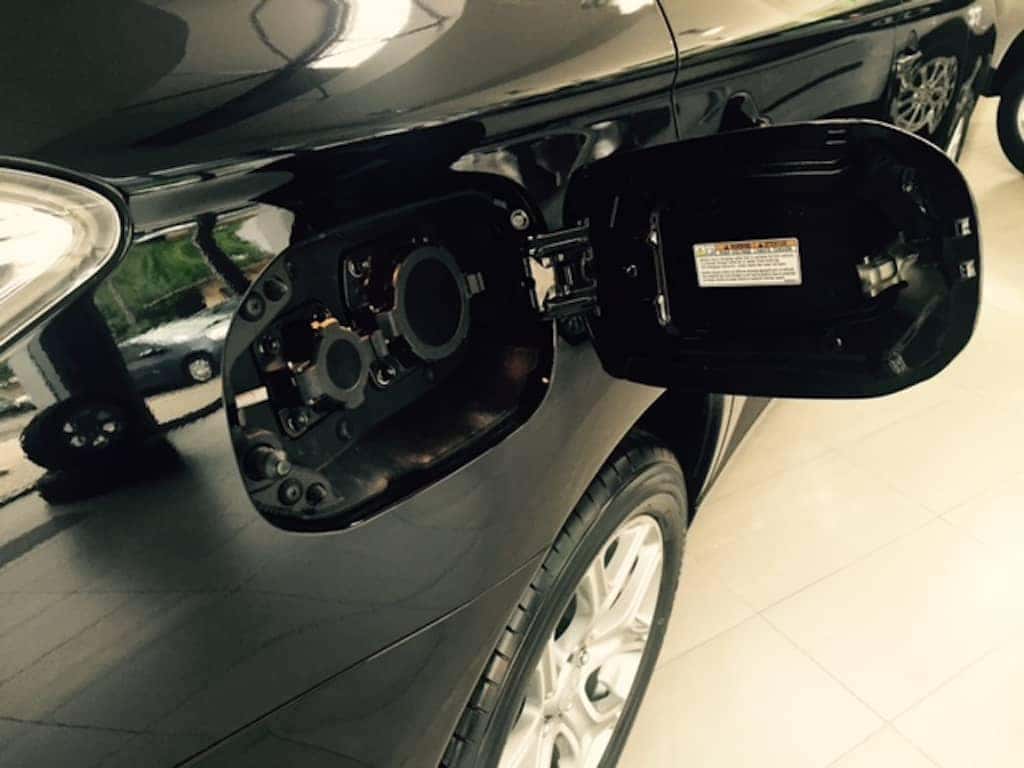
Charging the vehicles requires either an AC supply (a max of 16amps) or a CHAdeMO DC fast charger. Taylor notes that a 13amp domestic socket takes about five hours to fully charge the vehicle, while it would only take you 30 minutes if you’re using an 80% top-up via a fast charger. The writer also lamented the lack of 32amp capabilities, which would greatly reduce charging time. Perhaps this is an addition we’ll see when the vehicle ultimately reaches the United States.
Dan Mihalascu of CarScoops.com describes the unique features that accompany the Outlander PHEV, including “specifically-designed bumper extensions, side garnish and other decorative parts,” as well as optional two-tone 18-inch alloy wheels.
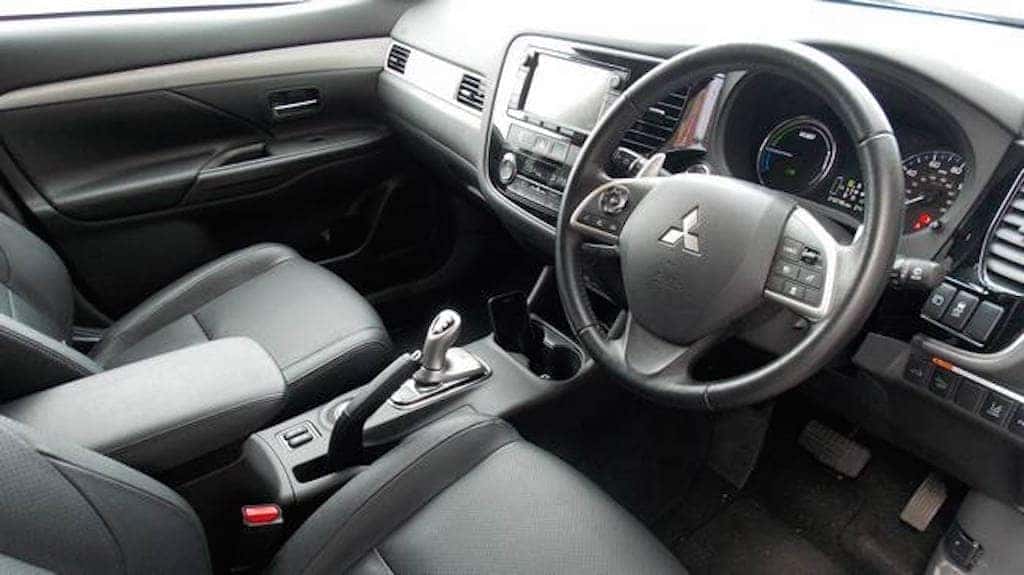
The interior has also seen some changes, as there’s new upholstery material, an optional brown leather trim (available to the G Premium Package) and an updated four-spoke steering wheel design. Zachary Shahan of Gas2.org also pointed out the comfy seats, comparing them favorably to those in a Mercedes or BMW.
To top it all off, there’s a center infotainment center. While Shahan would have preferred the screen been a bit larger, he still commended the system for it’s innovative technology. When the screen wasn’t being operated, it would display “visualizations” on the dash, which we would presume is supposed to mesh with the ‘zen’ feeling that accompanies a hybrid or electric vehicle.
An innovative app (available for Android and iOS) accompanies the PHEV. The program allows you to control your car’s climate, and it will also alert you of all charging details. You can even determine your electric vehicle’s charging schedule via the application.
Having recently been released in Japan, the PHEV is selling for the equivalent of $29,317. That price may be a bit low, however, as some estimates have put a PHEV’s starting price around $40,000 to $50,000. The price is generally reasonable, but it’s tough to compare considering the lack of similar vehicles on the market. Since it’s basically one of the only hybrid SUVs on the market, there’s really no other way to go if that’s what you’re seeking.
Potential buyers in the United States won’t have the same options as those living in Europe and Japan, including the PHEV trim. You could instead opt for a regular 2015 Outlander, which has still received very solid reviews. The attractive car has been commended for it’s safety features, luxurious interior, and impressive fuel economy. While the max cargo capacity and lack of space in the third-row is nothing to ignore, it also shouldn’t be enough to dissuade you from making the purchase.
The standard SE trim comes with a 2.4-liter 4-cylinder engine, which delivers around a 28 mile per gallon combined fuel economy and a 415/514.6 range (city/highway). The vehicle can reach a max horsepower of 166 while also producing an impressive 162 ft-lbs of torque.
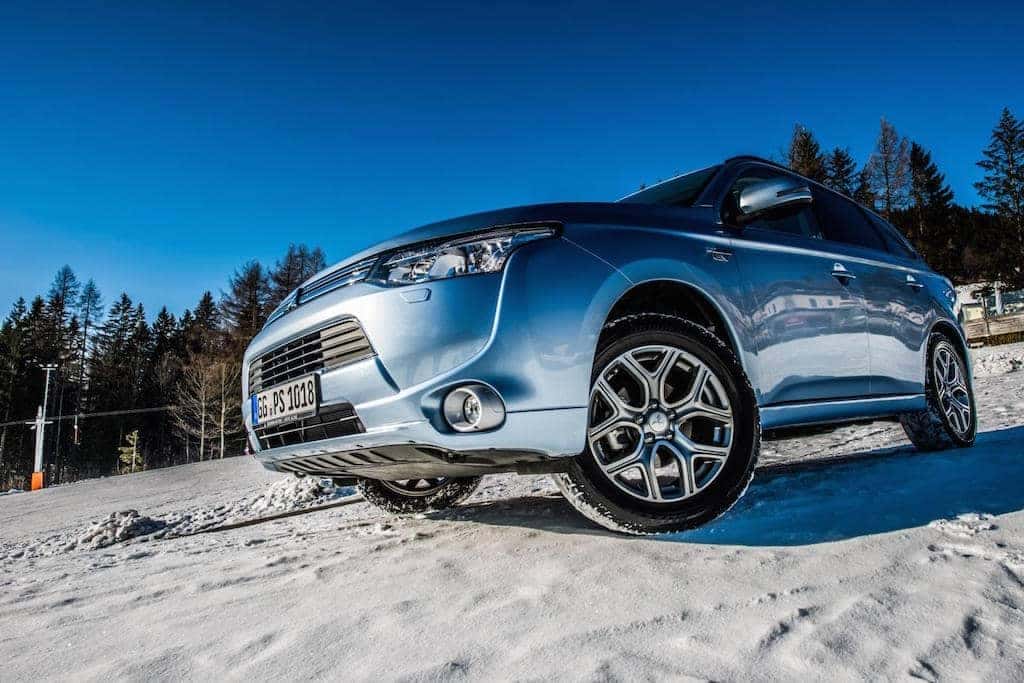
Ordinarily, we’d ask you what you’re waiting for and suggest you head down to your local dealership. Unfortunately, we’ll have to wait some time before the Outlander PHEV hits the United States. In the meantime, you could opt for a regular Outlander, and as you read above, that’s certainly a good choice. In fact, any Mitsubishi model would be a reasonable buy.
If you’ve decided to go with the brand, you should be starting your search at MLAM Mitsubishi. Their selection of vehicles will make up for the lack of PHEVs, and you’ll likely be driving out of the lot in a new car in no time!
Previous Post Five Biggest Changes Made to the 2016 Mitsubishi Outlander Next Post The All-New and Quieter Outlander