


Why the First-Generation Challenger is so Beloved
The first-generation Challenger may not blow car fans away with it’s revolutionary design or it’s unprecedented sales. In fact, the vehicle was a relatively late entrant to the ponycar segment, a market that had previously been dominated by the Ford Mustang and Chevy Camaro. While the vehicle was generally well regarded by the public, sales dropped significantly as the market for ponycars dropped dramatically. After having produced 76,935 units for 1970 (the vehicle’s first year in production), they were only selling 27,800 units by 1973, resulting in a stoppage of production in 1974.
Nowadays, customers appreciate the vehicle’s throwback style, making it a fairly common purchase among vintage car buyers. With 165,437 sold during the four years of production (and with many of those cars presumably off the road today), the nearly 50-years-old nameplate will still cost you at least $30,000 on the used car market. The vehicle isn’t necessarily rate, but don’t assume you can get one for nothing.
_Before you go shopping around for a 2016 Dodge Challenger in Miami , see why the original Challenger was (and still is) so popular… _
A Cushy Interior

The original Challenger was significantly larger than many of its competitors, as it featured a longer wheelbase and large dimensions. With a length approaching 200 inches and a height of 51 inches, passengers could expect an optimal amount of room.
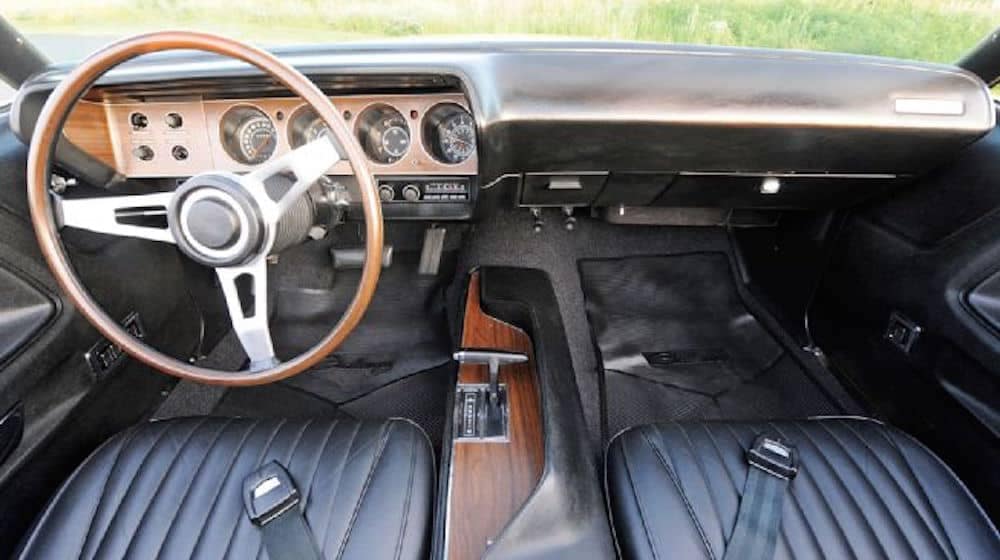
The luxurious interior featured comfortable vinyl seats, and customers could also opt for cloth or leather inserts. The instrument panel included one large pod for the speedometer, as well as four smaller circles for the oil pressure, alternator, engine temperature and fuel. Customers could add an air conditioner, and the car could also be fitted for a radio (engineers specifically included room for a single speaker).
Curiously, customers could also opt for three different steering wheels. The standard version featured a wood grain rim with padded spokes, but customers could choose to add a chrome plate on the horn ring and an accompanying “Rim Blow” horn.
A Stylish Exterior
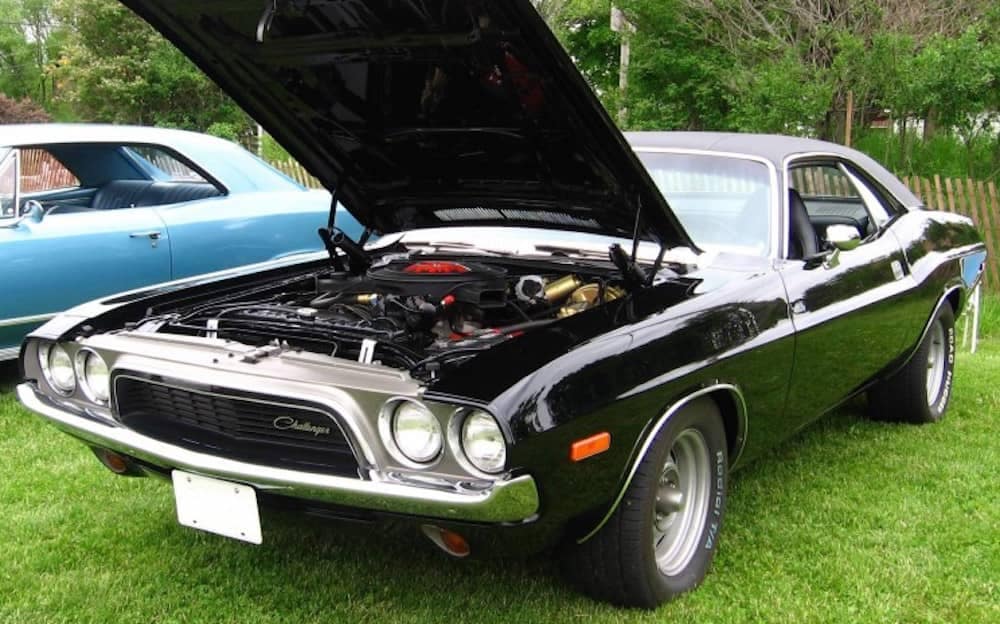
To help him with creating the car, Carl Cameron, the exterior designer, used some of his early sketches for the 1966 Dodge Charger as inspiration for the Challenge. He included his “deeply recessed grill” (as described by ChallengerSpecs.com ) behind the taillights, but he curiously switched up the design of his hood. The Challenger included several different looks, including a flat hood, a “power bulge” hood, and a hood featuring a shaker hood scoop.
Owners had the opportunity to deck out their car with an assortment of different vinyl stripes, which help gave the car a generally sporty feel. There was also an assortment of color options, including Dark Burnt Orange, Cream, and Light Gold.
A Variety of Engine Choices
There were 11 total potential engine options available for the original Dodge Challenger, some of which only accompanied specific models (like the Deputy, T/A, and R/T). The standard engine seemed to be the 225-cubic-inch 6-cylinder unit, which could pump out 145 horsepower.
Other interesting options included the 198-cubic-inch six-cylinder engine (101 horsepower) and the 440-cubic-inch RB V8 “Six Pack” engine (390 horsepower).
There are plenty of reasons to appreciate the first-generation Challenger. Luckily, you can still find the vehicles on the used car market, although the prices are generally inconsistent. While you may have some vehicles prices around $10,000, others may cost up to $50,000! Regardless, if you’re in the market for a classic vehicle, we’d say it’s certainly a car that should be pursued.
Previous Post 2016 Dodge Challenger: Putting the Power In Your Hands Next Post How the 2016 Dart Stays Ahead of the Competition